Burundi: Strengthening Coffee Cooperatives with the COCOCA Cooperative Union and WeltPartner eG
Strengthening Coffee Cooperatives in Burundi with COCOCA and WeltPartner eG
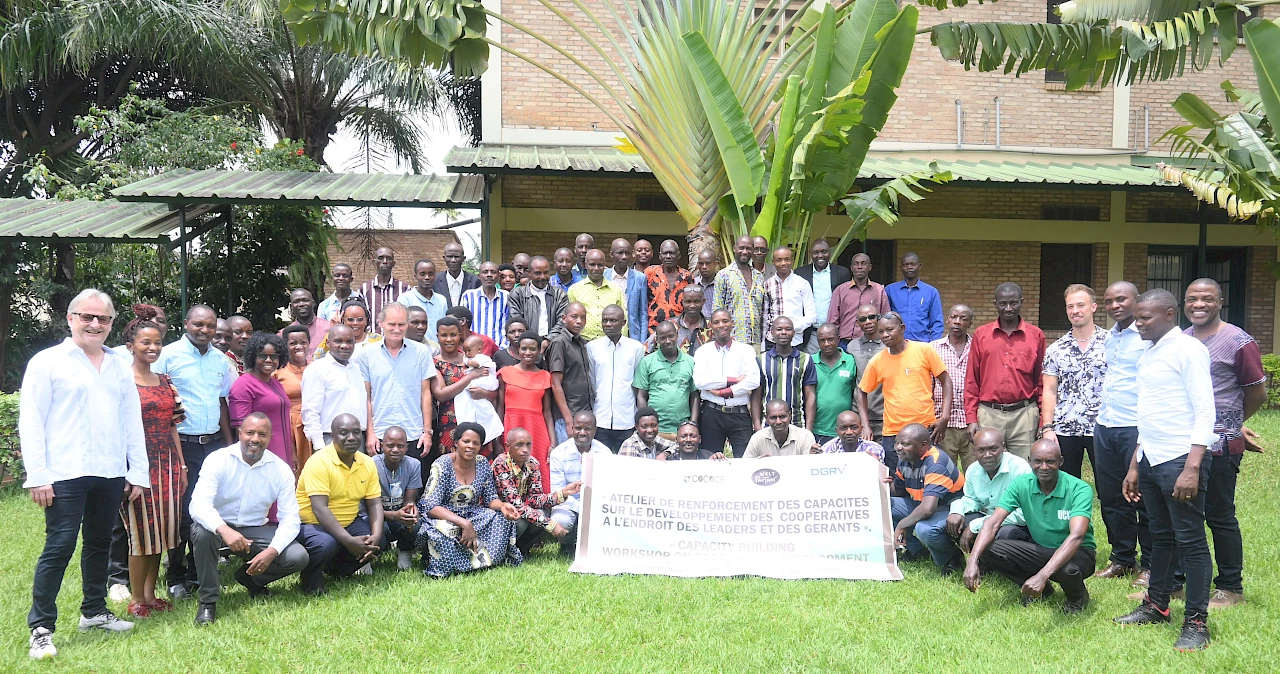
Since 2019, 18 coffee cooperatives with nearly 11,000 member families – united in the Burundian coffee cooperative union COCOCA – have benefited from micro-agroforestry projects on individual family plots. These are financed as part of the Baden-Württemberg & Burundi state partnership by the State Ministry of Baden-Württemberg, using its own funds and funds from the Ministry of Rural Affairs and Consumer Protection. Project partners in Germany include the Fair Trade cooperative WeltPartner eG and the University of Applied Forest Sciences in Rottenburg. On the Burundian side, COCOCA and the Université du Bujumbura are involved.
Since the start of the project, the 11,000 families have improved the use of their small plots (typically only 0.5 hectares each) such that they are now used threefold, rather than predominantly relying on coffee monoculture. On the one hand, the degree of self-sufficiency has been increased; simultaneously, reforestation with fruit trees has been carried out for income diversification and varied crop rotations, and shade trees have been planted that help the coffee growing beneath them achieve higher yields per bush and improved coffee quality. Currently, six cooperatives from the project sell Fairtrade-certified and partially organic-certified coffee to WeltPartner eG in Ravensburg. The other cooperatives still face challenges selling their coffee at good prices despite Fairtrade certification. This is partly because it is not yet organically certified, and partly because some cooperatives continue to struggle with structural, technical, and quality issues.