Sustainability with Cooperatives in Mexico and South America
The DGRV – German Cooperative and Raiffeisen Confederation coordinates the international activities of the cooperative organization and supports, funded by the Federal Ministry for Economic Cooperation and Development (BMZ), the establishment and strengthening of cooperative systems in over 25 countries across three continents. In doing so, DGRV not only makes an important contribution to implementing Germany's and the United Nations' development policy goals. The legal and corporate form of the cooperative is also gaining increasing importance through these international collaborations when addressing questions about designing forward-looking economic and social systems and appropriate regulatory frameworks.
Mexico Particularly Hard Hit by the Pandemic
Mexico ranks third internationally in the list of COVID-19 pandemic deaths, the economy shrank by 8.5 percent in 2020, and the outlook is not very promising either. Since 2019, President Andrés Manuel López Obrador's new government has been trying to reverse the legacy of previous administrations and combat extreme inequality and corruption—so far with only moderate success, recently certainly also due to the pandemic's impacts. The situation south of Mexico is similar. El Salvador, Guatemala, and Honduras have also experienced political upheavals or unrest. All countries in the region share the limited capacity of public budgets, which only allow for very restricted massive economic aid measures for the population.
Therefore, cooperatives in the region play an important role in supporting the population, especially the many small entrepreneurs. Savings and credit cooperatives (SCCs), despite often very strict lockdowns, were able to support members with flexible offerings and adjusted loan terms while complying with hygiene regulations.
Climate Change Impacts Worsen the Crisis
Agricultural cooperatives contributed with their local production to compensate for missing imports of staple foods. By way of explanation: despite its agricultural potential, the region has to import important products such as corn, beans, and rice, partly due to inefficient structures. But what the pandemic did not achieve was partly undone by the impacts of climate change. Severe tropical storms and flooding particularly affected the already beleaguered regions of southern Mexico and Central America.
DGRV's new project aims to address the structural weaknesses of rural regions, create sustainable employment and income by strengthening the participating cooperatives, contribute to combating climate change through renewable energy with citizen participation, and ensure access to sustainable financial services building on the traditionally better-positioned SCCs. Promoting cooperation between the various sectors is a particular focus of the project work.
DGRV Project Had to Be Reimagined
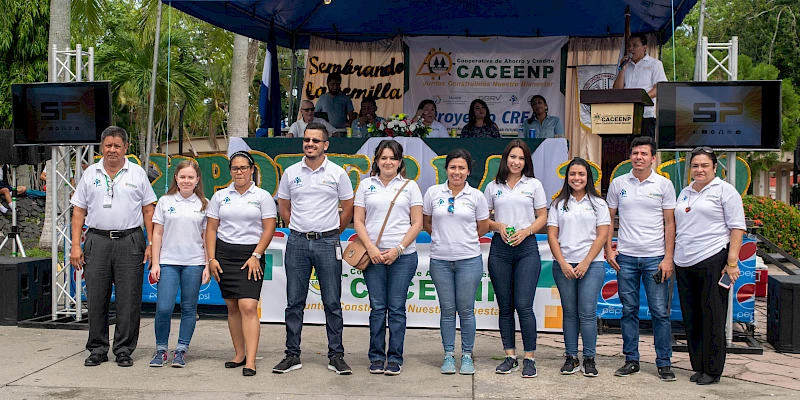
But immediately after the start of the new project, the entire planning of project activities had to be rethought. Whereas previously on-site consultations and training sessions were conducted along with workshops or professional programs, everything had to be quickly converted to virtual formats. Although a traditional seminar with over 300 board members and executives from 80 SCCs could still be held in Honduras at the end of February 2020 with the cooperative supervisor Consucoop, even at that time the majority of participants were already greeting each other not with handshakes but with elbow bumps.
Immediately afterward, in March, a professional program was planned to bring participants from the four project countries to Germany and Baden-Württemberg to learn about the achievements of cooperative and specialized banks in the field of sustainable finance. In record time, DGRV staff converted this activity into a virtual journey, and representatives from DGRV partners in Mexico, El Salvador, Guatemala, and Honduras were able to learn in several live sessions about the experiences of the Federal Financial Supervisory Authority (BaFin), GLS Bank, and Volksbank Ulm Biberach eG with sustainable financial products.
Thanks to BWGV and Its Members
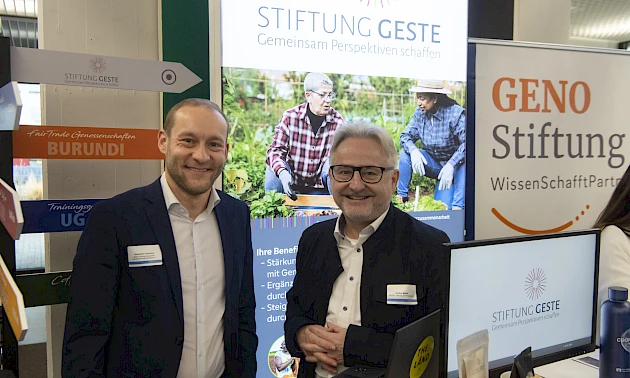
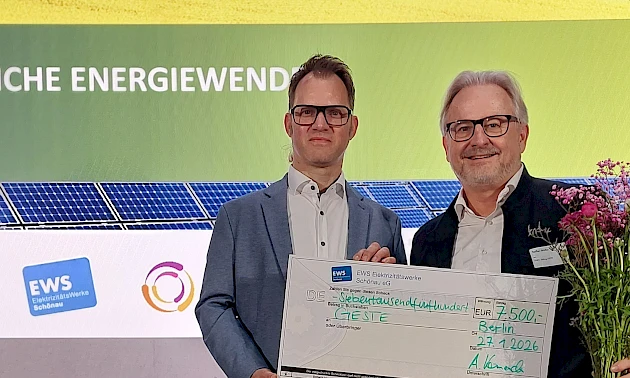
A professional exchange on the challenges of cooperative interest representation with President Dr. Roman Glaser from BWGV and participants from the Brazilian umbrella organization OCB was also on the program, along with various complementary projects that DGRV carries out in the region for the GESTE Foundation managed by BWGV. At this point, we would like to thank BWGV and its member companies for their ongoing and tireless support. German cooperatives enjoy a very high reputation worldwide, and the exchange of information repeatedly serves as motivation for DGRV's project partners.
The predominantly positive experiences with virtually conducted project activities will certainly lead to lasting changes in project work. Of course, personal contact is very important, especially in the cooperative sector. But from a sustainability perspective—which is precisely what the project work aims to promote—a good mix of on-site work and the use of virtual or digital components will be beneficial in the future.
Important Role of Cooperatives in Recovery Efforts
It remains to be seen how and how quickly the affected countries can recover economically. It will be particularly difficult for the population segments that were already marginalized before the pandemic to catch up on the progress made. Cooperatives will continue to play a very significant role in this. Through DGRV's projects and your support, we hope to continue contributing positively. In future editions of Geno Graph, we will report on further concrete project activities on the respective focus topics.